


 Contact
Informations
Contact
Informations Call Now
 Whatsapp
 Tr
Tr


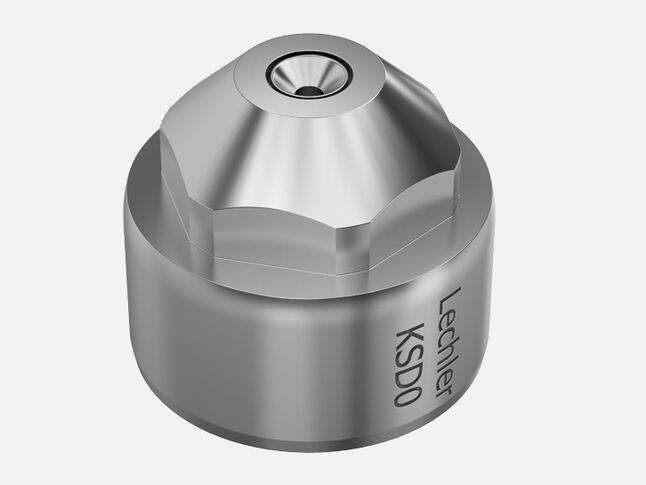
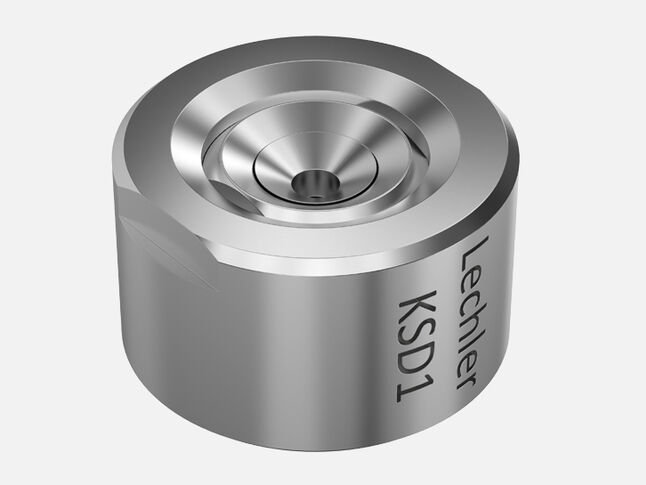
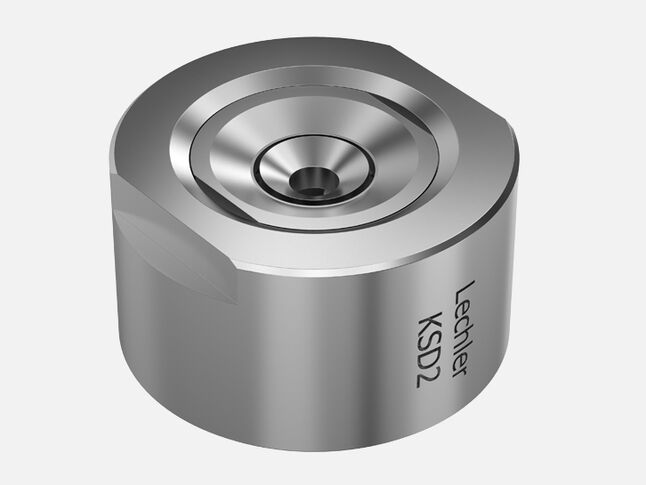
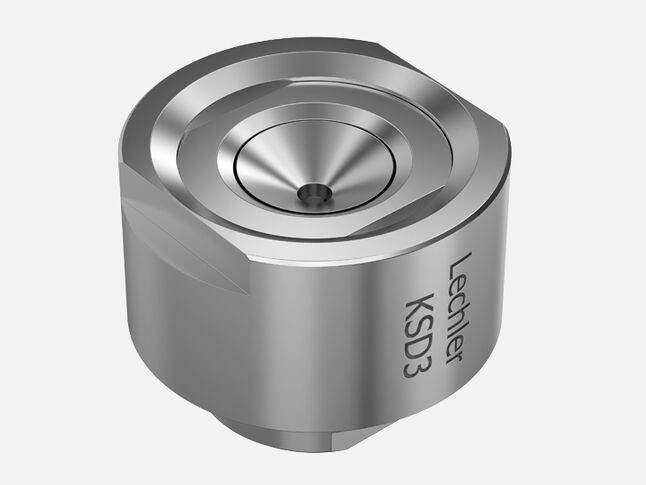
KSD nozzles operate on the principle of external mixing and have optimum emergency operation characteristics in case of failure of the atomization medium.
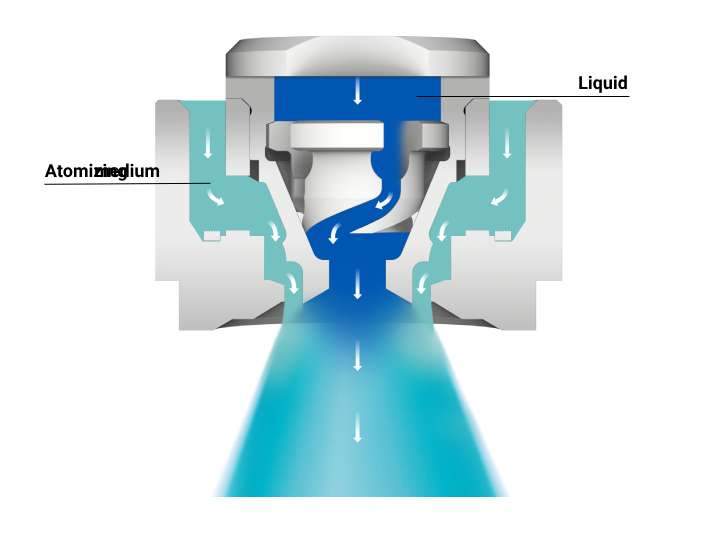
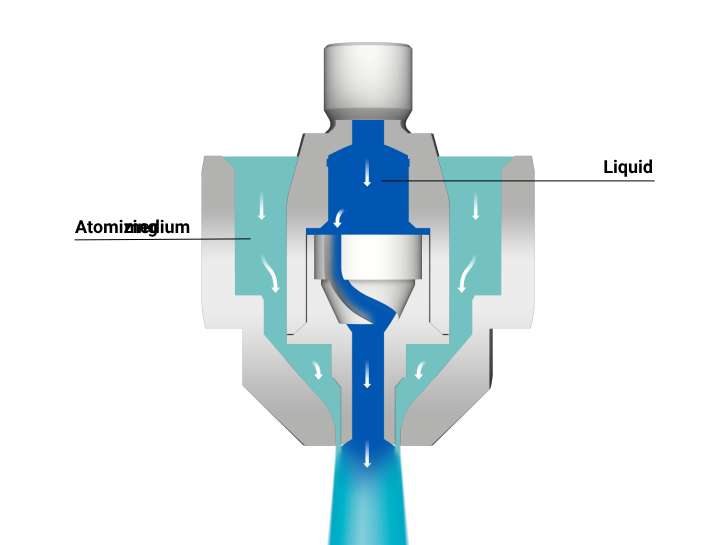
Emergency operation features due to external mixing KSD nozzles are dual-fluid nozzles that inject with a particularly smooth full cone, with a spray angle of up to 30°. Nozzles operate on the principle of external mixing, that is, gas and liquid are mixed outside the nozzle body.
The liquid is fed into the inner cavity of the KSD nozzle, swirling and emerging in the form of a hollow cone. The spray medium is fed into the KSD nozzle and exits through a defined annular opening. Immediately after leaving the KSD nozzle, the liquid is thoroughly mixed with the atomization medium. The hollow cone is transformed into a full cone with fine droplet spectrum. The fineness of the droplet spectrum depends significantly on the atomization medium/liquid ratio. The fineness of the droplet spectrum increases as the atomization medium/liquid ratio increases. Due to the external mixing principle used in the KSD nozzle, the liquid and spray medium do not affect each other when the inlet pressure changes. Since the media is mixed outside the KSD nozzle, this nozzle is also suitable for using steam as the atomization medium. KSD nozzles have optimum emergency operating characteristics in case of failure of the atomization medium, since in such cases the liquid is still atomized into a hollow cone. However, in this case the droplet spectrum is not as fine as when an atomizing medium is used.


